
Venous Leg Ulcer Treatment at Vein Center Doctor
Open wounds on the lower legs that refuse to heal often trace back to underlying vein disease. Vein Center Doctor's board-certified specialists treat venous leg ulcers across 12 locations in New York and New Jersey by addressing the root circulatory problem, not just the wound surface.
A free vein screening identifies whether venous insufficiency is driving your non-healing ulcer. Early intervention prevents complications and accelerates tissue repair.
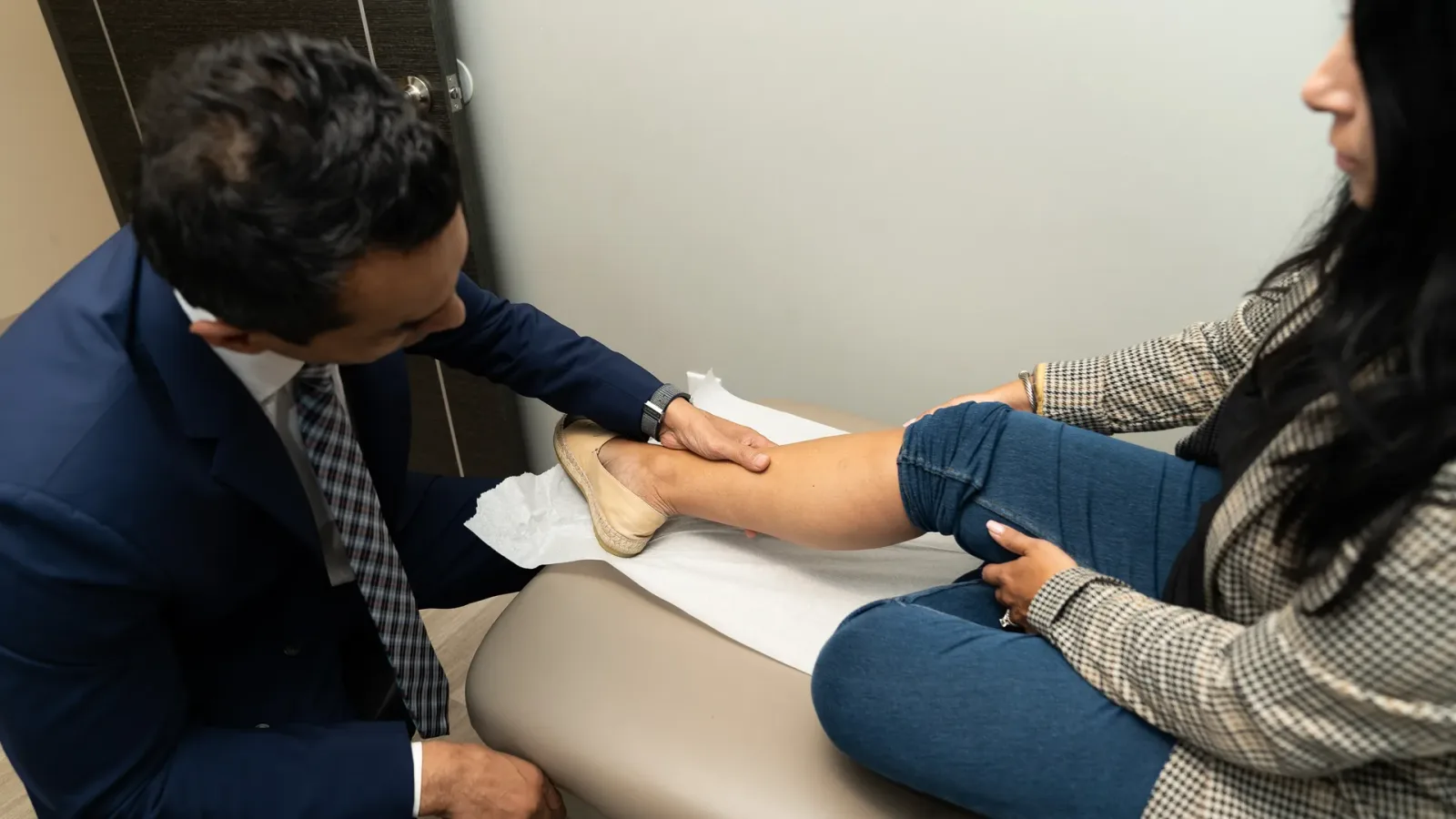
What Are Venous Leg Ulcers?
A venous leg ulcer is an open sore, typically on the inner ankle or lower calf, caused by sustained high pressure in the veins of the lower leg. When vein valves fail to close properly, blood pools in the lower extremities instead of returning to the heart -- a condition called chronic venous insufficiency.
That pooled blood raises venous pressure and damages surrounding tissue over time. The skin breaks down, forming a shallow, irregularly shaped wound that may weep fluid or develop a yellowish-white fibrin coating.
Vein Center Doctor treats venous leg ulcers by correcting the underlying valve dysfunction. Once venous pressure normalizes, the body's healing response can close the ulcer permanently.
How Venous Leg Ulcers Develop
Venous leg ulcers are a late-stage consequence of chronic venous insufficiency. When failed vein valves allow blood to pool in the lower leg, sustained venous hypertension damages the skin and soft tissue above the ankle, thinning the protective barrier until it breaks down into an open wound.
These ulcers typically appear on the inner ankle, often weep clear fluid or develop a yellowish-white fibrin coating, and resist healing until the underlying valve dysfunction is treated. Vein Center Doctor uses duplex ultrasound to locate the source of reflux so circulation can be restored and the ulcer can close permanently.

Symptoms of Venous Leg Ulcers
Wound Characteristics
Venous leg ulcers appear as open, shallow sores on the lower leg -- most commonly near the inner ankle. The wound bed is often red or covered in yellow fibrin. Surrounding skin may appear darkened, hardened, or discolored from hemosiderin staining.
Warning Signs Before Ulceration
Skin changes frequently precede ulcer formation. Vein Center Doctor encourages patients to seek evaluation when they notice persistent swelling, brownish skin discoloration around the ankles, or a feeling of tightness and warmth in the lower leg.
Pain and Discomfort
Venous ulcers cause aching, throbbing pain that worsens with prolonged standing. Elevating the legs often provides temporary relief. Infection at the wound site intensifies pain and may produce odor or increased drainage.
Causes and Risk Factors
Primary Cause: Chronic Venous Insufficiency
Damaged or weakened vein valves allow blood to flow backward and pool in the lower legs. This sustained venous hypertension damages capillary beds and surrounding tissue. Over time, oxygen-starved skin breaks down into an ulcer.
Vein Center Doctor treats the valve dysfunction that causes this pressure buildup. Correcting the underlying vein problem is essential for lasting ulcer healing.
Risk Factors
- History of deep vein thrombosis (DVT) -- Blood clots damage vein valves permanently
- Varicose veins -- Visible varicose veins indicate valve failure that can progress to ulceration
- Obesity -- Excess weight increases venous pressure in the lower extremities
- Prolonged standing or sitting -- Occupations requiring long periods without leg movement slow venous return
- Previous leg injury or surgery -- Trauma to lower leg veins can trigger venous insufficiency
- Age over 65 -- Vein valve competence declines with age

Accurate Evaluation by Dr. Rahul Sood
Dr. Rahul Sood leads diagnosis and treatment at Vein Center Doctor. Every condition evaluation begins with a duplex ultrasound examination to identify the source of venous reflux, followed by a personalized treatment plan. Dr. Sood has performed more than 10,000 vein procedures and brings triple board certification to every consultation.
Common Questions About Venous Leg Ulcers
How long does a venous leg ulcer take to heal?
Healing time depends on ulcer size, duration, and whether the underlying vein problem is treated. Small ulcers with corrected venous insufficiency can close within four to six weeks. Larger or long-standing ulcers may take several months.
Can venous leg ulcers come back after treatment?
Ulcers recur when the underlying vein disease remains untreated. Vein Center Doctor addresses the root cause -- vein valve dysfunction -- to reduce recurrence risk. Ongoing compression therapy further protects against future ulceration.
Do I need surgery for a venous leg ulcer?
Most patients do not need open surgery. Vein Center Doctor uses minimally invasive outpatient procedures such as RFA, VenaSeal, and sclerotherapy to treat venous insufficiency without general anesthesia or hospital admission.
Does insurance cover venous leg ulcer treatment?
Most insurance plans cover treatment for venous leg ulcers and the underlying venous insufficiency that causes them. Vein Center Doctor's team verifies your coverage and manages pre-authorization before any procedure.
Related Conditions
Venous leg ulcers develop from the same vein valve problems that cause other venous conditions. Vein Center Doctor evaluates your full circulatory picture during your free screening.
- Chronic venous insufficiency -- The primary cause of venous leg ulcers
- Varicose vein treatment -- Varicose veins indicate valve failure that can progress to ulceration
Venous Leg Ulcer Treatment at Our Locations
Vein Center Doctor provides expert diagnosis and care at all of our clinic locations across New York and New Jersey. Find the office nearest you.
Stop Waiting for a Leg Ulcer to Heal on Its Own
Venous leg ulcers worsen without treatment of the underlying vein disease. Vein Center Doctor's free screening identifies the cause and starts you toward lasting healing -- no referral needed.