
Spider Vein Treatment Specialist
Those thin red and purple lines on your legs are not just a cosmetic issue. Spider veins often signal deeper venous problems that worsen without treatment. Vein Center Doctor's board-certified specialists have performed over 10,000 successful vein procedures across 12 locations in New York and New Jersey.
Finally — a vein specialist who treats spider veins at the source, not just the surface.
What Are Spider Veins?
Spider veins, clinically known as telangiectasias, are dilated superficial blood vessels measuring 0.5 to 1 millimeter in diameter that appear as branching red, blue, or purple lines beneath the skin surface. They develop when one-way venous valves weaken, allowing blood to pool and stretch the vessel wall. Spider veins most commonly appear on the legs and face.
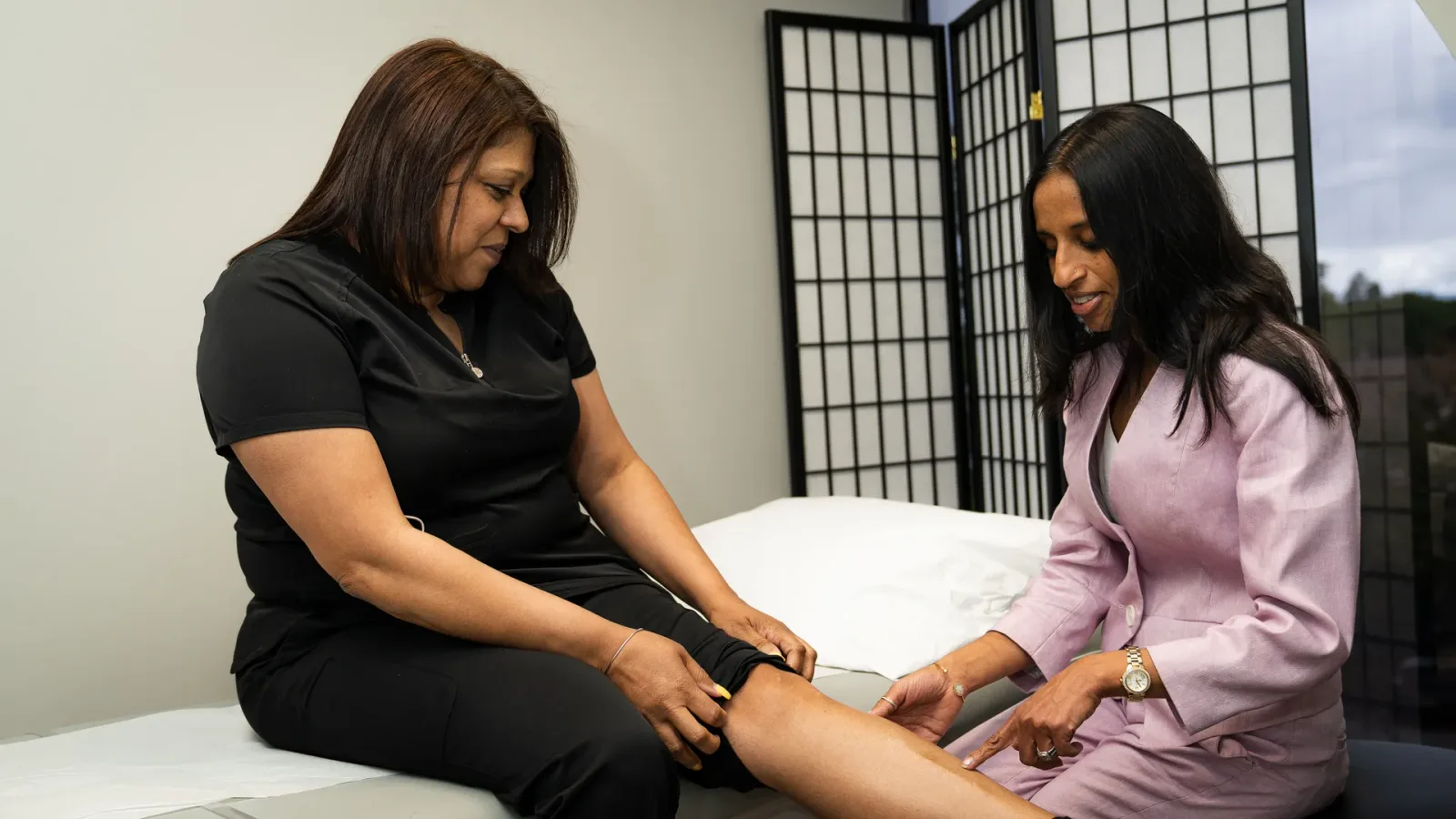
Vein Center Doctor diagnoses spider veins using visual examination and, when indicated, duplex ultrasound to check for underlying venous reflux. This evaluation determines whether your spider veins are isolated or connected to a deeper vein condition like chronic venous insufficiency.
Understanding the root cause matters. Surface-only treatment without addressing reflux leads to recurrence within months.
Understanding Spider Veins
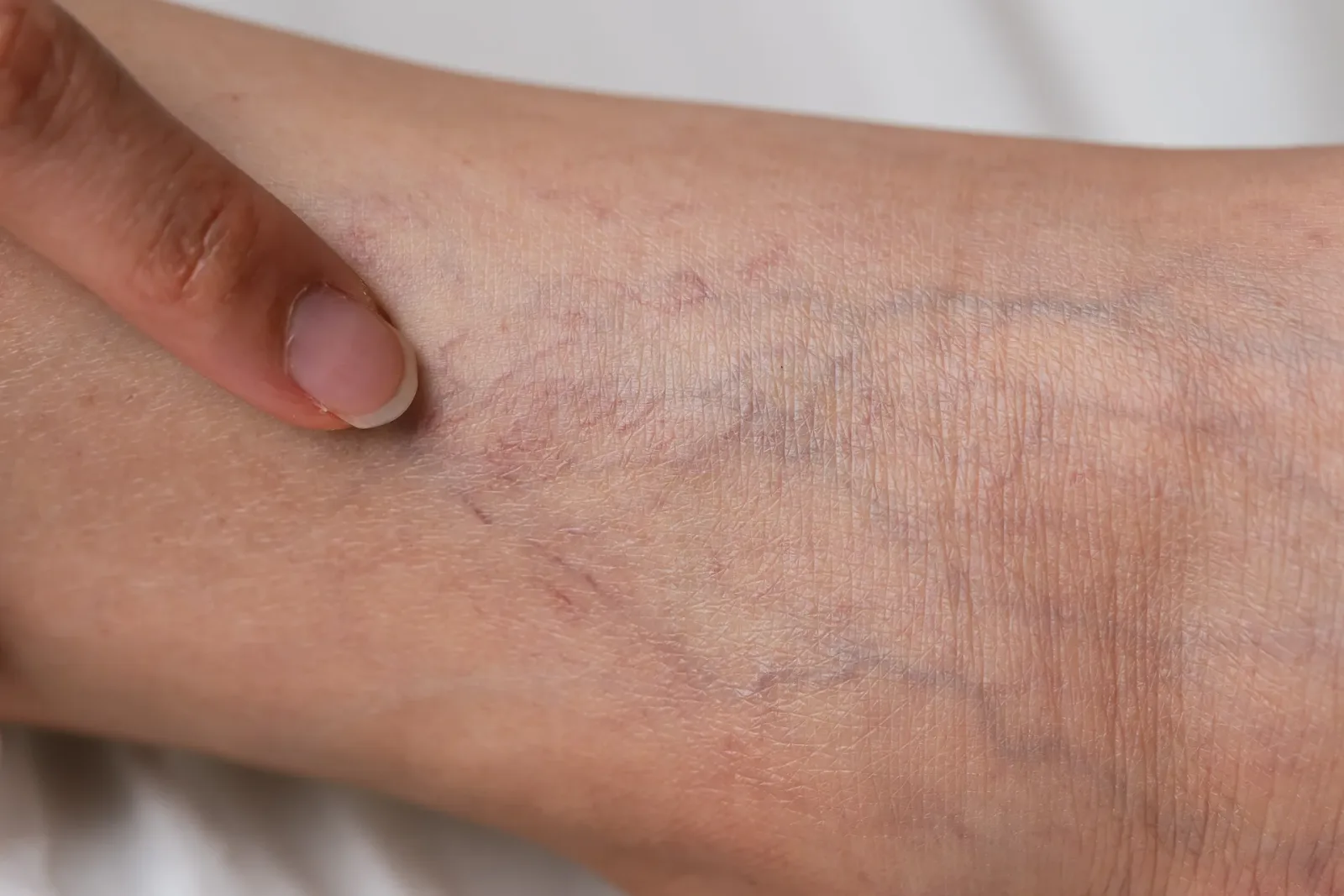
Spider veins — medically called telangiectasias — are dilated superficial vessels just below the skin, typically 0.5 to 1 millimeter in diameter. They appear as thin red, blue, or purple branching patterns on the legs, ankles, or face, and form when small vein valves weaken and let blood pool near the surface.
Although spider veins are often thought of as cosmetic, they can signal deeper venous reflux that benefits from evaluation. Vein Center Doctor uses duplex ultrasound when needed to rule out underlying venous insufficiency before recommending sclerotherapy or other targeted treatments.
Spider Vein Symptoms
Visible Vein Patterns
Spider veins appear as clusters of thin, branching lines — often described as a web or starburst pattern. They typically show up on the calves, ankles, and behind the knees.
Aching and Heaviness
Some patients experience dull aching or a feeling of heaviness in the legs, especially after standing for extended periods. These symptoms may indicate venous insufficiency beneath the visible spider veins.
Burning or Itching Sensations
Spider veins can cause localized burning or itching along the affected area. Vein Center Doctor's specialists distinguish between surface irritation and deeper vascular symptoms during your free screening.
Spider Vein Causes and Risk Factors
Hereditary Valve Weakness
Genetics play a significant role in spider vein development. If your parents or siblings have visible leg veins, your risk of developing telangiectasias increases substantially.
Prolonged Standing or Sitting
Occupations that require extended standing — teaching, nursing, retail — place sustained hydrostatic pressure on leg veins. That pressure forces blood backward through weakened valves, stretching vessel walls into visible spider veins.
Hormonal Changes
Pregnancy, menopause, and oral contraceptive use alter estrogen and progesterone levels. These hormonal shifts relax vein walls, making spider vein formation more likely. Vein Center Doctor sees a high proportion of female patients between ages 30 and 60 for this reason.
Age-Related Vein Degeneration
Vein walls lose elasticity as collagen degrades with age. The combination of weakening walls and decades of gravitational pressure makes spider veins increasingly common after age 40.

Accurate Evaluation by Dr. Rahul Sood
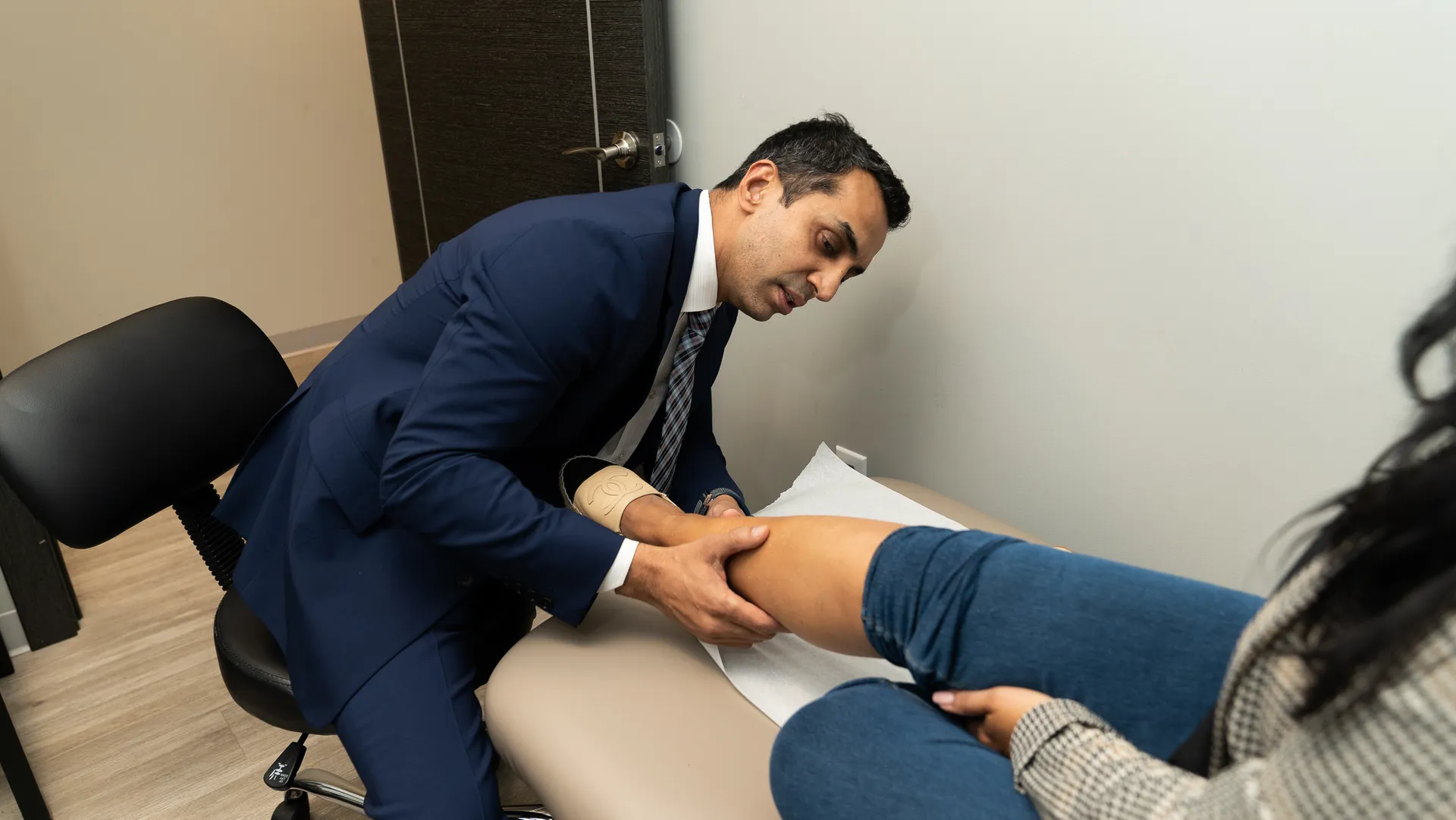
Dr. Rahul Sood leads diagnosis and treatment at Vein Center Doctor. Every condition evaluation begins with a duplex ultrasound examination to identify the source of venous reflux, followed by a personalized treatment plan. Dr. Sood has performed more than 10,000 vein procedures and brings triple board certification to every consultation.
Common Questions About Spider Vein Treatment
Are spider veins dangerous?
Spider veins themselves are not dangerous. However, they can indicate underlying venous insufficiency that worsens over time. A free screening at Vein Center Doctor determines whether deeper vein issues exist.
Does insurance cover spider vein treatment?
Insurance coverage depends on whether the treatment is classified as medically necessary. When spider veins cause documented symptoms — pain, swelling, skin changes — insurance carriers frequently approve coverage. Our team verifies your benefits before scheduling treatment.
How many sclerotherapy sessions do I need?
Most patients require 2 to 4 sclerotherapy sessions spaced 4 to 6 weeks apart. Vein Center Doctor's specialists assess your response after each session and adjust the treatment plan accordingly.
Can spider veins come back after treatment?
Treated spider veins do not return. New spider veins may develop in other areas if the underlying cause — valve dysfunction, hormonal changes, or prolonged standing — persists. Ongoing compression therapy reduces recurrence risk.
Related Vein Conditions
Spider veins often coexist with other venous disorders. Vein Center Doctor treats the full spectrum of vein conditions:
- Varicose vein treatment — larger, bulging veins caused by deeper valve failure
- Chronic venous insufficiency — the progressive condition underlying many vein problems
Spider vein specialist in Ardsley, NY | Spider vein specialist in Clifton, NJ
Spider Vein Treatment at Our Locations
Vein Center Doctor provides expert diagnosis and care at all of our clinic locations across New York and New Jersey. Find the office nearest you.
Schedule Your Free Spider Vein Screening
Even if you have lived with spider veins for years, treatment can still deliver visible improvement. Vein Center Doctor's free screening evaluates your veins, identifies any underlying conditions, and outlines your treatment options.
Schedule a free screening at any of our 12 New York and New Jersey locations.