
Chronic Venous Insufficiency Treatment at Vein Center Doctor
Your legs feel heavy by noon. Swelling around your ankles worsens through the afternoon. The skin near your shins has started turning brown.
Chronic venous insufficiency is a progressive vein condition -- and it does not improve on its own. Vein Center Doctor's board-certified specialists diagnose and treat CVI at 12 locations across New York and New Jersey, with free vein screenings for every new patient.
What Is Chronic Venous Insufficiency?
Chronic venous insufficiency (CVI) is a condition in which the one-way valves inside leg veins weaken or fail, allowing blood to flow backward and pool in the lower extremities. This sustained venous hypertension damages surrounding tissue, causing swelling, skin changes, and progressive deterioration of the affected limb.
CVI affects an estimated 25 million Americans. The condition worsens over a clinical staging system called the CEAP classification, progressing from visible veins (C1-C2) through skin changes and edema (C3-C4) to active ulceration (C5-C6).
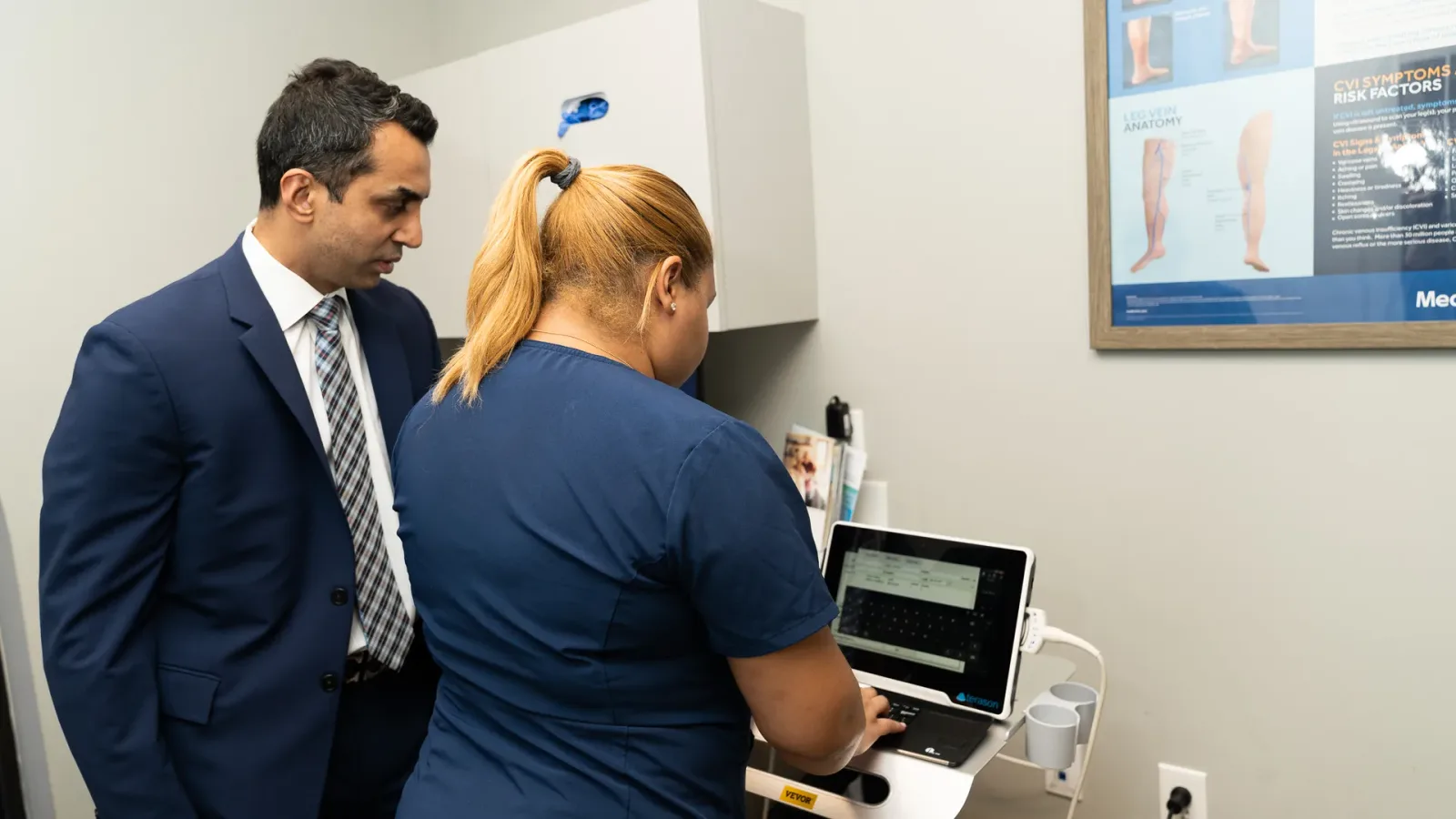
Vein Center Doctor identifies the stage of your CVI through duplex ultrasound and physical examination. Early intervention prevents progression to the advanced stages where tissue damage becomes difficult to reverse.
How Chronic Venous Insufficiency Develops
Chronic venous insufficiency begins when the one-way valves inside the leg veins weaken and no longer close properly. Blood that should flow upward toward the heart starts to pool in the lower legs, creating sustained venous hypertension that stretches vein walls and inflames surrounding tissue over time.
Left untreated, this pressure causes progressive skin changes — swelling, discoloration, thickening, and eventually venous ulceration. Vein Center Doctor uses duplex ultrasound to pinpoint exactly which valves have failed so treatment can target the source of reflux rather than only the visible symptoms.
Symptoms of Chronic Venous Insufficiency
Leg Heaviness and Fatigue
CVI causes a persistent heaviness in the legs that intensifies after standing or sitting for extended periods. By late afternoon, your legs may feel as though they carry extra weight.
Swelling and Edema
Fluid accumulates around the ankles and lower legs when venous valves fail to push blood back toward the heart. Swelling typically worsens throughout the day and improves overnight.
Skin Changes and Discoloration
Sustained venous pressure forces red blood cells through capillary walls into surrounding tissue. Hemosiderin -- the iron pigment released from these cells -- stains the skin a characteristic reddish-brown, most commonly near the ankles.
Varicose Veins
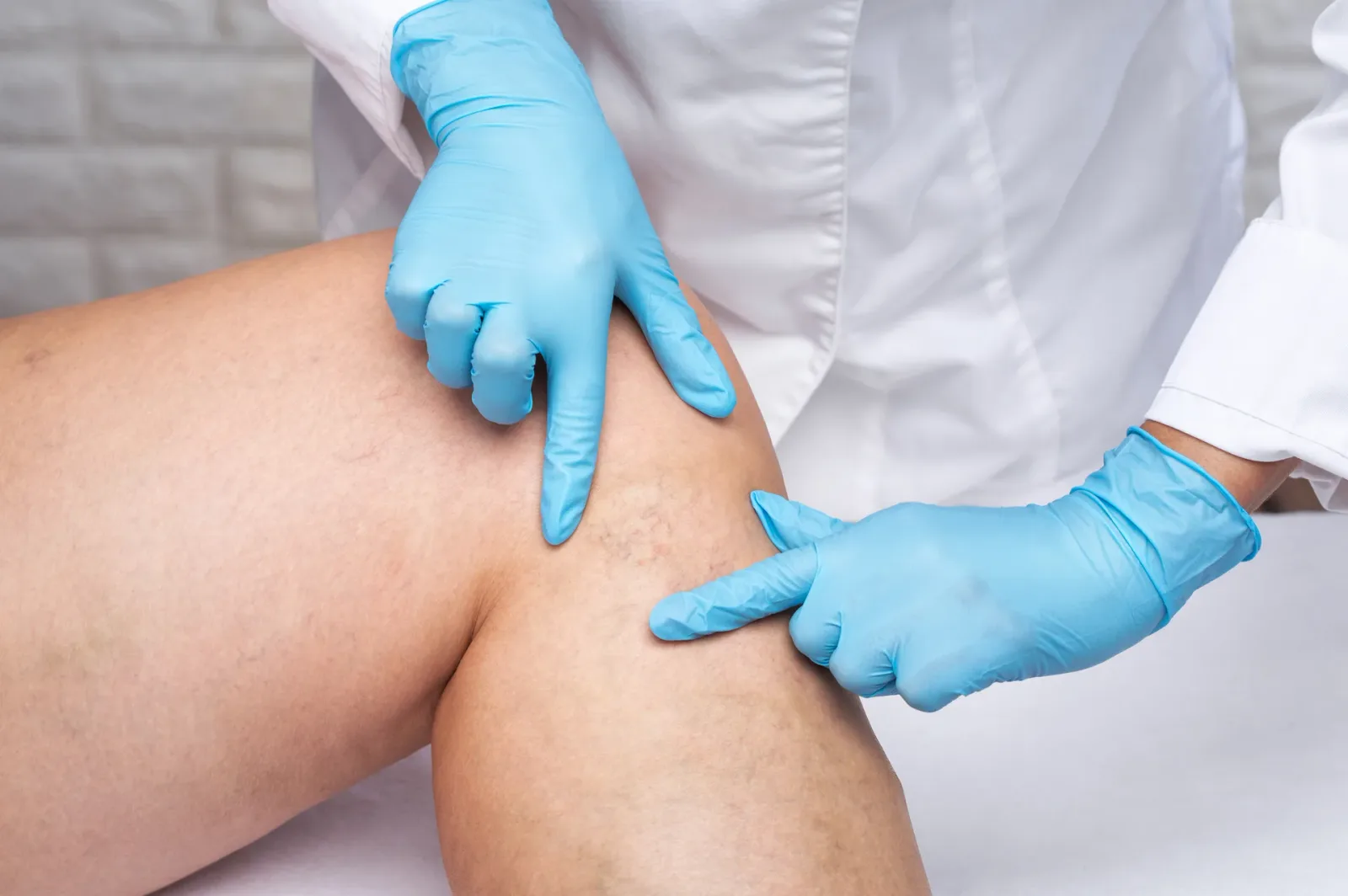
Enlarged, twisted veins visible on the leg surface are frequently an early sign of CVI. The same valve failure that causes insufficiency allows these veins to expand under pressure.
Venous Leg Ulcers
In advanced CVI, chronic inflammation and tissue damage produce open wounds near the ankles. These venous ulcers resist healing without treatment that addresses the underlying reflux.
Causes and Risk Factors for CVI
How CVI Develops
The veins in your legs contain bicuspid valves that open to allow blood to flow upward toward the heart and close to prevent backflow. When these valves weaken or sustain damage, blood falls backward under gravity -- a process called venous reflux.
Reflux creates sustained pressure in the lower leg veins. This venous hypertension stretches vein walls, damages further valves downstream, and triggers the cascade of symptoms associated with CVI.
Common Risk Factors
| Risk Factor | How It Contributes |
|---|---|
| Family history of vein disease | Inherited valve weakness and vein wall structure |
| Prolonged standing or sitting | Sustained gravity pressure on leg veins |
| Pregnancy (especially multiple) | Increased blood volume and hormonal valve relaxation |
| Obesity | Added pressure on the venous system |
| Age over 50 | Cumulative valve wear and reduced vein elasticity |
| Prior deep vein thrombosis | Clot damage to valve structure |
| Female sex | Hormonal effects on vein wall integrity |
Vein Center Doctor evaluates your specific risk profile during a free vein screening. Understanding which factors apply helps your specialist tailor the treatment approach.

Accurate Evaluation by Dr. Rahul Sood
Dr. Rahul Sood leads diagnosis and treatment at Vein Center Doctor. Every condition evaluation begins with a duplex ultrasound examination to identify the source of venous reflux, followed by a personalized treatment plan. Dr. Sood has performed more than 10,000 vein procedures and brings triple board certification to every consultation.
Common Questions About Chronic Venous Insufficiency
Is CVI dangerous?
CVI is a progressive condition. Left untreated, it advances from swelling and discoloration to tissue breakdown and open leg ulcers. Early treatment at Vein Center Doctor prevents these complications.
Can CVI be reversed?
Valve damage cannot be reversed, but treatments like RFA and VenaSeal eliminate the refluxing veins causing the problem. Blood reroutes through healthy veins, and symptoms resolve.
How is CVI diagnosed?
Vein Center Doctor uses duplex ultrasound to visualize blood flow direction in leg veins. The scan identifies exactly which valves have failed and which veins require treatment.
Does insurance cover CVI treatment?
CVI treatment is medically necessary and covered by most insurance plans. Vein Center Doctor verifies your benefits and obtains authorization before scheduling procedures.
What happens if I don't treat CVI?
Without intervention, CVI progresses through the CEAP stages. Skin changes become permanent. Tissue damage worsens. Venous ulcers develop and resist healing.
Related Vein Conditions
CVI frequently coexists with or leads to other vein conditions. Vein Center Doctor evaluates the full spectrum of venous disease during your screening.
Varicose vein treatment addresses the enlarged veins that often accompany CVI. Venous leg ulcer treatment manages the wounds that develop in advanced stages.
CVI specialist in Ardsley, NY | CVI specialist in Clifton, NJ
CVI Treatment at Our Locations
Vein Center Doctor provides expert diagnosis and care at all of our clinic locations across New York and New Jersey. Find the office nearest you.
Stop CVI Before It Progresses
Even if leg swelling and discoloration have been part of your routine for years, the board-certified vein specialists at Vein Center Doctor can halt the progression and restore comfort. Free CVI screenings at all 12 locations.